Olga Gaydukevich:
founder of Rosa Azora School
In this magazine, we asked Olga Gaydukevich for her insights on trends in modern floristry and how they are reflected in her florist training program.
The main trends in floristry today emphasize a deep connection to nature and an eco-friendly approach. At our school, we teach alternative floral techniques that enable florists to work without floral foam. These include kenzan arrangements, split stems, and methods from Japanese floristry, such as ikebana. These approaches strongly resonate with our students because a love for nature should be at the heart of every florist’s work.
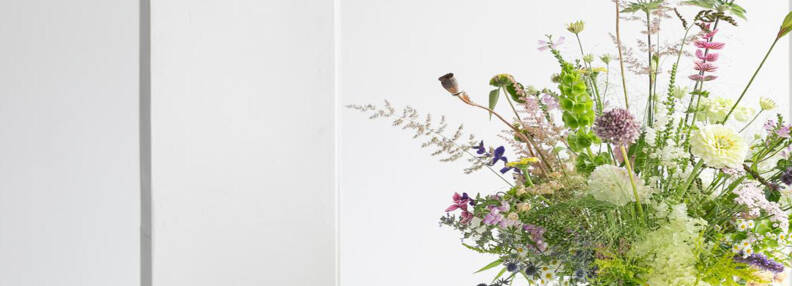
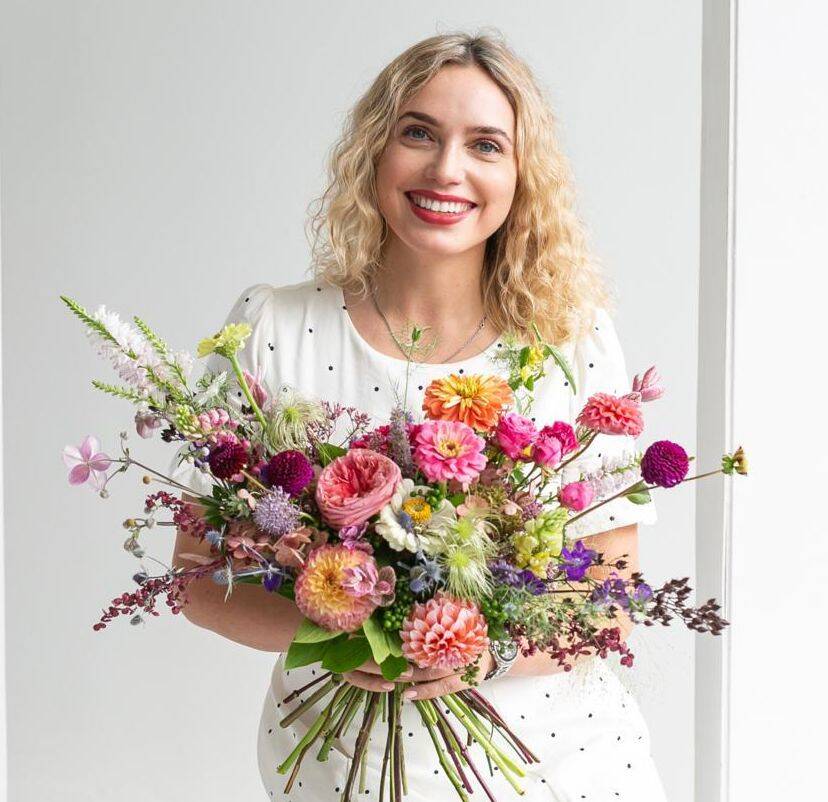
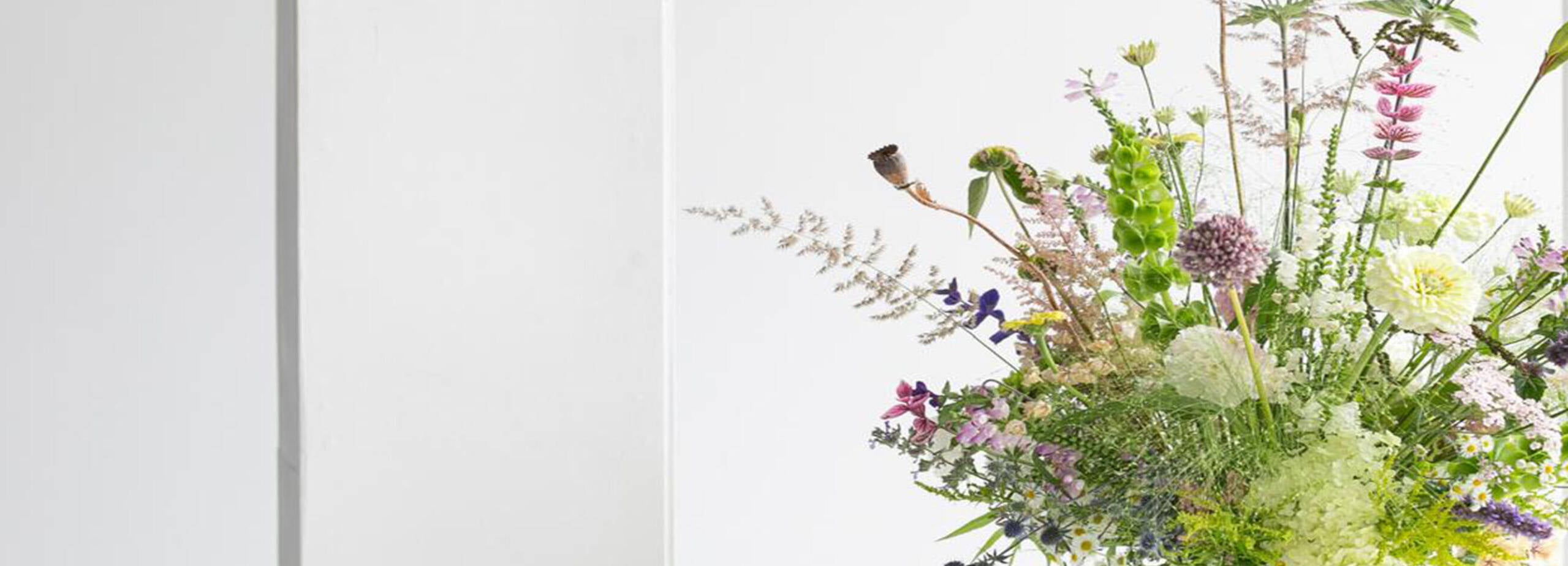
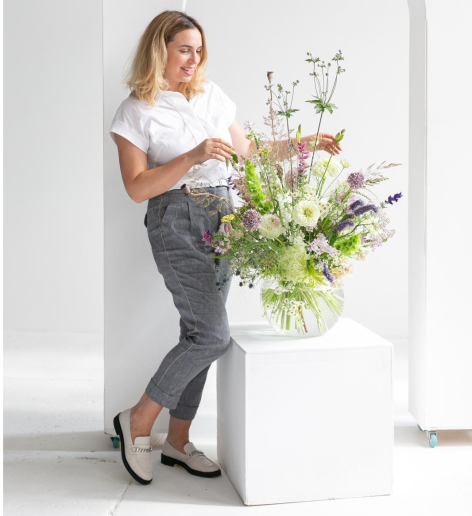
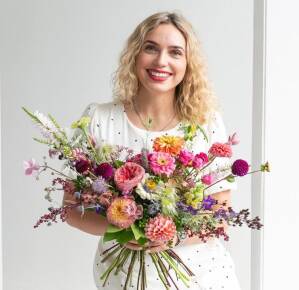
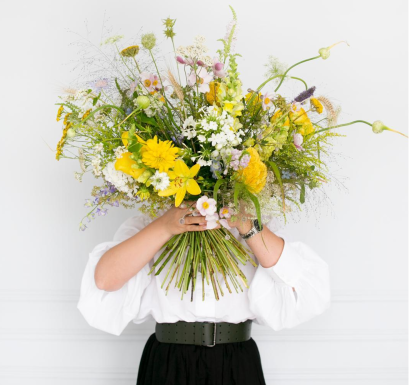
Another key trend is free-form bouquets, where flowers and plants are allowed to express themselves naturally rather than being forced into rigid arrangements. We value the individuality of each flower—when creating a bouquet, we don’t try to overpower a flower’s natural beauty. Instead, we observe its unique character and allow it to shine within the composition. This results in airy, sprawling bouquets that feel light, organic, and transparent.
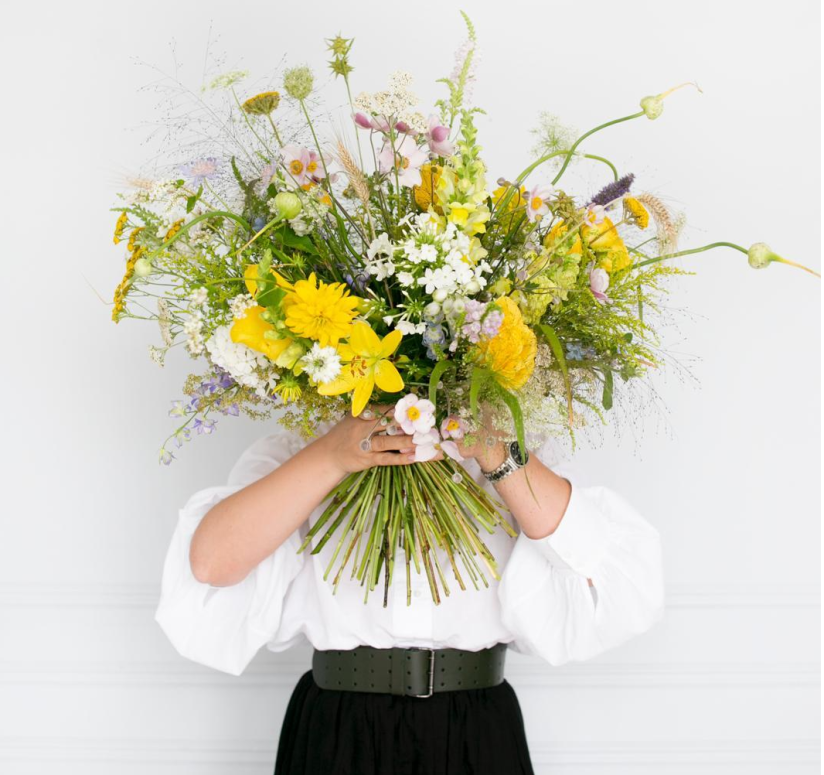
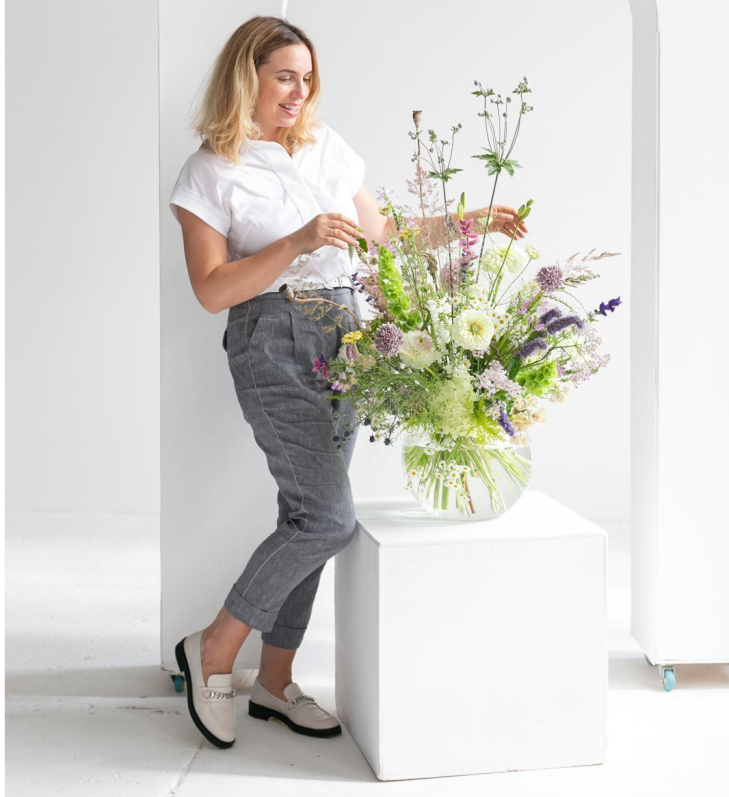
We also embrace the trend of naturalness. While we teach classic techniques, such as structured spirals and decorative frameworks, we wholeheartedly support the effortless, garden-style approach to floristry. Sometimes, a bouquet doesn’t need an intricate design—just a handful of flowers freshly gathered from a garden, with stems cleaned and placed loosely in a vase. This “untouched by human hands” aesthetic, where flowers and branches (such as blooming forsythia, lilac, or spirea) stand freely in a vase, is something we deeply appreciate.
Every year, we host a lecture on international floral trends, an essential part of our school’s curriculum. We also open these lectures to the public to help elevate floral culture and awareness in our community. We take pride in making a meaningful contribution to the understanding and appreciation of floristry, ensuring it continues to grow and inspire new audiences.
The growing popularity of farm-grown flowers has also brought renewed attention to so-called “grandmother’s flowers”—blooms that were once common in every garden. Flowers like ammi, dill, cosmos, calendula, zinnias, phlox, peonies, gladiolus, and dahlias have made a comeback, becoming highly sought after in modern floristry.
>

Trade Marketeer
Olga is mainly focussing on Trade relationships, connections and campaigns
for our range of products, mostly introductions. With a special focus on
Cut Chrysanthemums and the Eastern European market.
BLOG AUTHOR:

Click here >
Get inspired!
By refreshing insights and floral splendor in our inspiration blogs
Publication: 23rd of April 2025

>

Home
I
Contact
Agenda
I
I
I
Mood Pictures
Blogs
Spring 2025




Agenda
Contact
Mood Pictures
Blogs


ARTICLE BY BLOOMROOM BY DÜMMEN ORANGE I WWW.DUMMENORANGE.COM
Always be up to date of
new inspiration?
Sign up for
our newsletter!
Get on our list

The growing popularity of farm-grown flowers has also brought renewed attention to so-called “grandmother’s flowers”—blooms that were once common in every garden. Flowers like ammi, dill, cosmos, calendula, zinnias, phlox, peonies, gladiolus, and dahlias have made a comeback, becoming highly sought after in modern floristry.
Every year, we host a lecture on international floral trends, an essential part of our school’s curriculum. We also open these lectures to the public to help elevate floral culture and awareness in our community. We take pride in making a meaningful contribution to the understanding and appreciation of floristry, ensuring it continues to grow and inspire new audiences.
Another key trend is free-form bouquets, where flowers and plants are allowed to express themselves naturally rather than being forced into rigid arrangements. We value the individuality of each flower—when creating a bouquet, we don’t try to overpower a flower’s natural beauty. Instead, we observe its unique character and allow it to shine within the composition. This results in airy, sprawling bouquets that feel light, organic, and transparent.
We also embrace the trend of naturalness. While we teach classic techniques, such as structured spirals and decorative frameworks, we wholeheartedly support the effortless, garden-style approach to floristry. Sometimes, a bouquet doesn’t need an intricate design—just a handful of flowers freshly gathered from a garden, with stems cleaned and placed loosely in a vase. This “untouched by human hands” aesthetic, where flowers and branches (such as blooming forsythia, lilac, or spirea) stand freely in a vase, is something we deeply appreciate.
Olga Gaydukevich:
founder of Rosa Azora School
In this magazine, we asked Olga Gaydukevich for her insights on trends in modern floristry and how they are reflected in her florist training program.
The main trends in floristry today emphasize a deep connection to nature and an eco-friendly approach. At our school, we teach alternative floral techniques that enable florists to work without floral foam. These include kenzan arrangements, split stems, and methods from Japanese floristry, such as ikebana. These approaches strongly resonate with our students because a love for nature should be at the heart of every florist’s work.
Publication: 23rd of April 2025
Trade Marketeer
Olga is mainly focussing on Trade relationships, connections and campaigns
for our range of products, mostly introductions. With a special focus on
Cut Chrysanthemums and the Eastern European market.
BLOG AUTHOR:

Click here >
Get inspired!
By refreshing insights and floral splendor in our inspiration blogs

ARTICLE BY BLOOMROOM BY DÜMMEN ORANGE WWW.DUMMENORANGE.COM
Home
I
I
I
I
Contact
Agenda
Mood Pictures
Blogs
Spring 2025